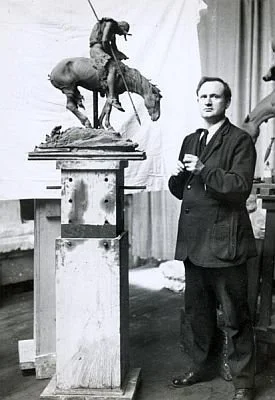
The End of the Trail
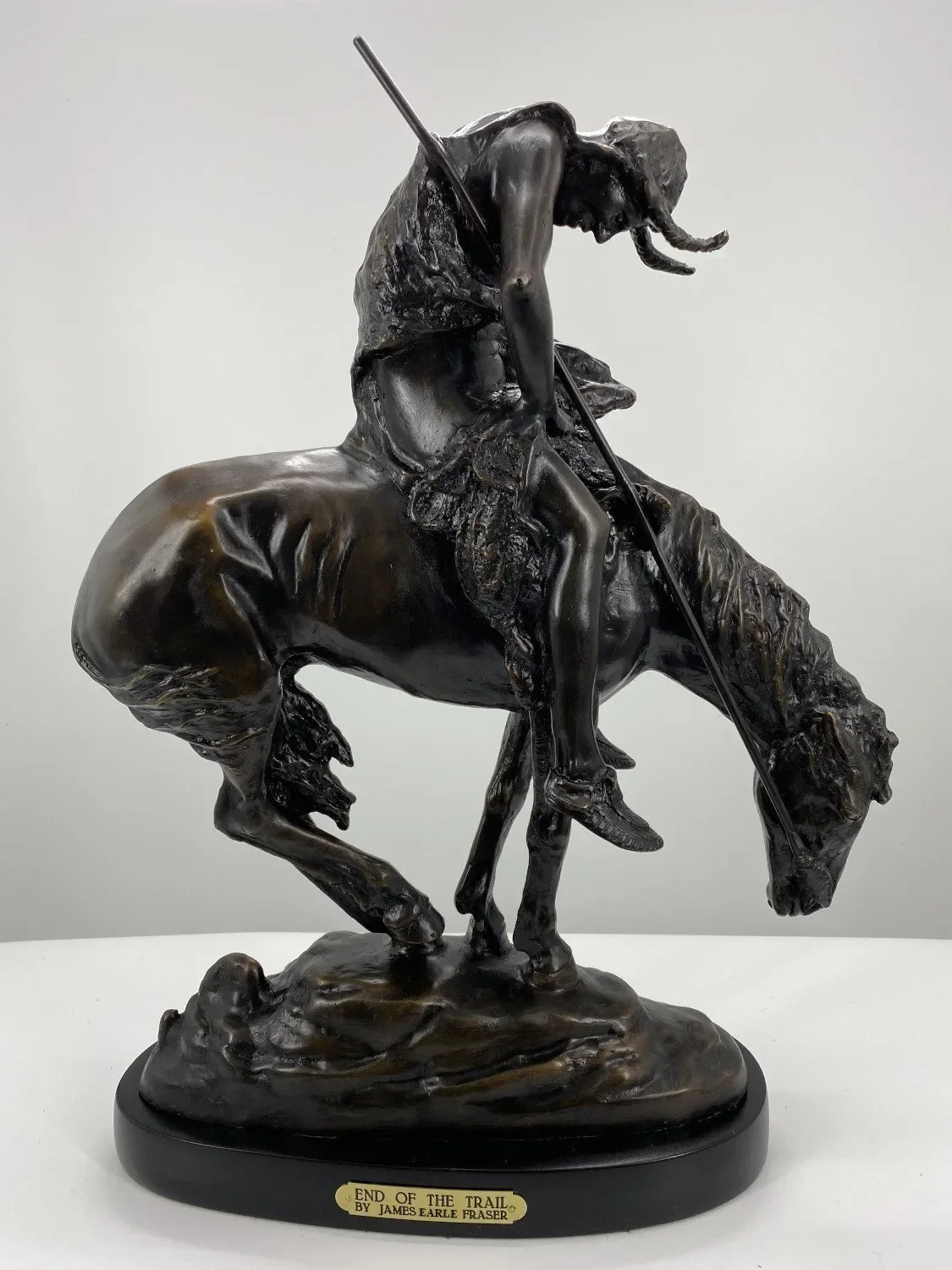
Artist: James Earle Fraser
Originally modeled: 1915
The End of the Trail is one of the most recognizable and emotionally charged sculptures in American art. It depicts a Native American man slumped forward on an exhausted horse, his spear lowered, his journey seemingly finished.
The sculpture is not a scene of battle or triumph. There is no motion forward—only fatigue. The horse’s lowered head and stiff legs mirror the rider’s posture, reinforcing a shared sense of depletion. Together, they form a quiet but powerful image of endurance pushed to its limit.
James Earle Fraser grew up in the Dakota Territory and witnessed the effects of westward expansion firsthand. He intended this work as a lament rather than a celebration—a reflection on the displacement of Indigenous peoples and the closing of the American frontier. Dignity remains in the figure, but momentum is gone.
Since its creation, The End of the Trail has been widely reproduced and exhibited, becoming both iconic and controversial. Some viewers interpret it as an expression of mourning and loss; others critique it for presenting Native Americans as defeated rather than resilient and ongoing cultures. That unresolved tension is part of why the sculpture continues to provoke discussion more than a century later.
This piece invites viewers to pause—not to celebrate conquest, but to consider its human cost, and to reflect on how history is remembered, represented, and re-examined over time.